Why Food Retailers Should Make Their Recipes Shoppable for AI Agents
For food retailers, 2025 quietly became the year **agentic commerce** stopped being a forward-looking slide in a strategy deck and started being a measurable slice of real sales. OpenAI's Agentic Commerce Protocol went live inside ChatGPT, Google announced its Agent Payments Protocol alongside more than 60 launch partners, and the card networks followed with their own agent-payment tools. The practical consequence for retailers is straightforward, if uncomfortable: if an AI agent can't read your catalogue, it can't recommend or buy from it, no matter how strong your product range or pricing actually is. Visibility has moved inside the assistant, not just the search results page. This guide covers what's actually changed, the protocols worth understanding, and where to start without committing to a full platform rebuild.
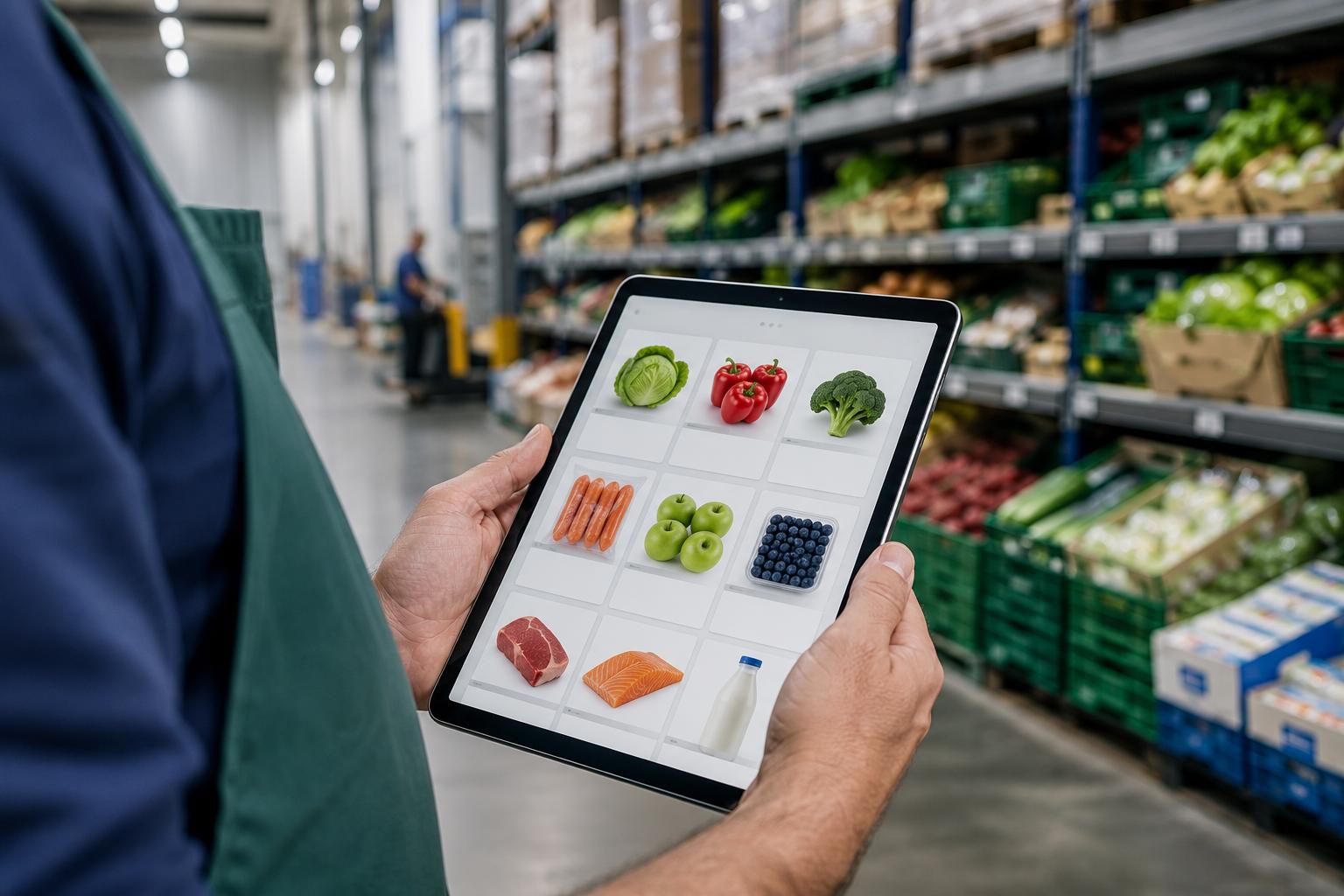
Agentic commerce arrived faster than most retailers expected
2025 was the year the infrastructure for agentic commerce actually shipped, rather than staying a slide in a strategy deck. OpenAI's Agentic Commerce Protocol went live inside ChatGPT, and Google announced its Agent Payments Protocol (AP2) in the same month, with over 60 launch partners including major card networks and payment processors. Visa and Mastercard followed with their own agent-payment tools shortly after.
The result: AI agents are estimated to have influenced around $67 billion of global Cyber Week 2025 sales, roughly a fifth of all orders. That's not a future prediction, it's a number from a shopping season that's already happened. For food retailers, the practical question has shifted from 'should we prepare for this' to 'how far behind are we already.'
What 'shoppable' actually means for a recipe
A recipe that's genuinely shoppable for an AI agent isn't just a page with a list of ingredients at the bottom. It needs structured, machine-readable data: exact quantities, SKU-level product matches from your own catalogue, substitution logic for out-of-stock items, and pricing that updates in real time.
Without that structure, an agent asked to 'order the ingredients for this week's dinners' either can't find your products at all, or has to guess, badly, at what you actually sell. Visibility inside an AI assistant now depends on whether your catalogue can answer that question cleanly, not on how well the recipe reads to a human.
The protocols worth knowing: MCP, ACP and AP2
Three standards matter most for food retailers entering this space. MCP (Model Context Protocol), created by Anthropic, is the connective layer that lets an AI agent read and act on your product and recipe data inside assistants like ChatGPT, Gemini and Claude. ACP, developed by OpenAI and Stripe, governs how an agent executes a checkout on a shopper's behalf. AP2, Google's Agent Payments Protocol, provides the cryptographic trust layer confirming a human actually authorised a given purchase.
Retailers don't need to pick a single winner between these; most practical integrations will end up supporting more than one, since they answer different questions in the same transaction rather than competing for the same job.
What changes for a retailer, practically
Four things shift at once. Product visibility moves inside AI assistants rather than search results or a retailer's own site, so a catalogue an agent can't parse is effectively invisible to that channel. Basket-building becomes automated: an agent turns a recipe or a meal plan directly into a cart, without a shopper manually searching for each ingredient. Substitution and fulfilment logic needs to be explicit and machine-readable, since an agent can't call a store to ask if something's in stock. And attribution changes too, retailers need a way to understand which sales originated from an agent-led journey rather than a traditional one.
None of this requires abandoning existing e-commerce infrastructure; it requires an additional, agent-facing layer on top of it.
Getting started without a full platform rebuild
The realistic starting point isn't a ground-up rebuild of a retailer's commerce stack, it's making the existing catalogue and recipe content structured and agent-readable, then ensuring presence on the surfaces where agents actually shop. That typically means an MCP-based integration that connects a retailer's product data to assistants like ChatGPT, Gemini and Claude, alongside support for checkout-execution and payment-trust protocols like ACP and AP2 as they mature.
Platforms built specifically for food retail, including Remy, exist to shortcut this work, turning recipe inspiration into a shoppable basket without requiring a retailer to build the agent-facing layer from scratch. The retailers moving now aren't betting on a future trend; they're catching up to a shopping season that's already happened.
Talk to RemyAgentic commerce isn't a bet on where retail might go, the standards, the payments and the shopper behaviour all arrived in the same year. Retailers who make their recipe and product data agent-ready now are simply catching up to a shopping season that's already happened, rather than waiting for one that hasn't.
Frequently asked questions
Is agentic commerce actually happening yet, or is it still theoretical?
It's already happening, AI agents are estimated to have influenced around $67 billion of global Cyber Week 2025 sales, roughly a fifth of all orders, and the core protocols (ACP, AP2) went live and launched with major partners in the same year.
What's the difference between ACP and AP2?
ACP, from OpenAI and Stripe, governs how an AI agent executes a checkout on a shopper's behalf. AP2, from Google, is a separate trust layer that cryptographically confirms a human actually authorised a given payment. They address different parts of the same transaction.
Do we need to rebuild our e-commerce platform to support this?
Not necessarily; most retailers can add an agent-facing layer, typically via MCP, on top of existing commerce infrastructure rather than rebuilding it, particularly if catalogue and recipe data can be made structured and machine-readable.
How do we measure whether this is working?
Track agent-originated traffic and orders separately from traditional channels where possible, since attribution for agent-led purchases is still an evolving area across the industry.