The Best Pantry Inventory Apps in 2026, Ranked
Pantry inventory apps have an unusually high abandonment rate, and the reason is always the same. Getting food into the app is work, and the app only pays you back later. Most people stop before the payback arrives. So the only ranking criterion that matters is how little effort entry takes, and whether the app does something with the data once it has it. An inventory you maintain by hand that then just sits there is a chore with no reward. A warning about researching this category: of the roundups on the first page of search results for pantry inventory apps, every single one we checked was published by a company selling one of the apps. There is effectively no independent review coverage here, so what follows leans on the apps' own store listings for the facts and on experience for the judgement.
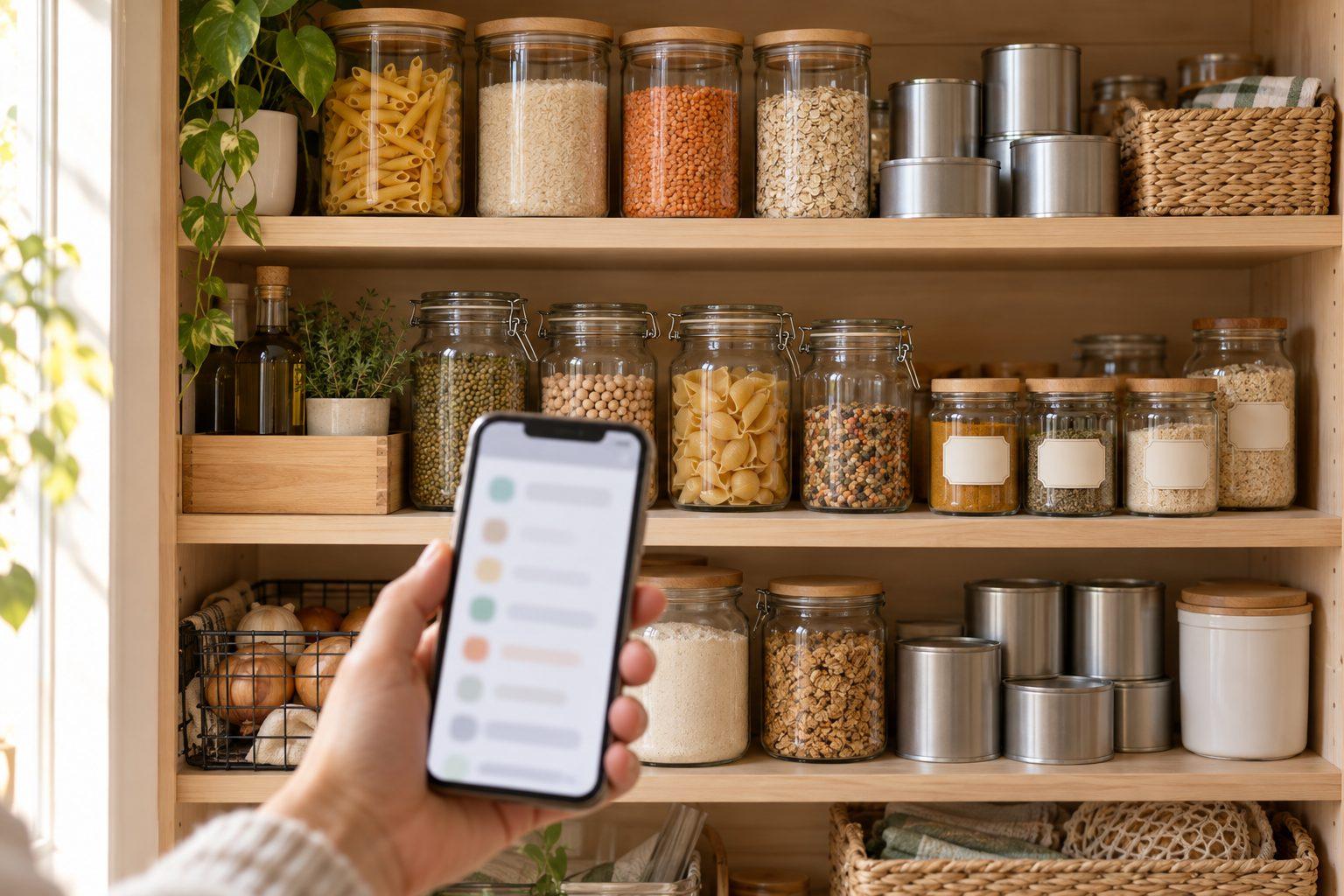
Remy
Remy tracks what is in your kitchen with expiry dates, and then does the thing that makes tracking worth the effort: it connects that inventory to what you are going to cook and what you need to buy. Items you already have drop out of the shopping list, and what is about to go off can steer what you cook this week.
That loop is the difference between an inventory and a list of groceries you happen to own. The honest limitation is that Remy is a recipe, planning and shopping app that tracks your kitchen, not a dedicated warehouse-grade inventory tool, so if you want to track four hundred lines across three freezers, a specialist will go deeper. Verdict: the best option if you want the inventory to actually change what you cook and buy.
NoWaste
NoWaste is the most complete dedicated tracker. You can add food by scanning barcodes, scanning receipts or taking photos, which covers every realistic way a shop arrives in a kitchen, and it handles separate locations for fridge, freezer and pantry, or even a second home.
It is free with no ads, with NoWaste Pro at $6.99 a year or $29.99 for a lifetime licence, and holds 4.2 out of 5 from over 750 ratings on the App Store. Receipt scanning is the feature that sets it apart: it is by far the fastest way to log a whole shop. Verdict: the best dedicated pantry tracker, and the one to pick if entry speed is what has defeated you before.
Pantry Check
Pantry Check is the stronger option for a household rather than an individual. It syncs in real time with family sharing, so two people can add and remove items without treading on each other, and it builds shopping lists from your usage patterns rather than just from what is missing.
It is free for up to 200 items, with Premium and Pro tiers taking that to 2,000 and 10,000, priced between $1.99 and $29.99, and rates 4.5 out of 5 from around 1,600 ratings. The 200-item free cap is lower than it sounds once you start scanning a full kitchen. Verdict: the best choice for a shared household, provided you check the item cap before you commit an evening to scanning.
Why most pantry apps get abandoned
The failure mode is predictable. You spend an evening scanning everything, the app is briefly delightful, and then real life happens: you use half an onion, you buy something without scanning it, the inventory drifts out of sync with the cupboard, and once it is wrong it is worthless.
The apps that survive this are the ones where correcting drift is cheap and where the data is doing something useful in the meantime. Before committing, ask what the app gives you on day three, not on day one. If the honest answer is a tidy list, it will not last the month.
What to look for
Four things, in order. First, how food gets in: barcode scanning is the minimum, receipt or photo scanning is much better. Second, whether expiry dates generate an actual reminder rather than just sitting in a column. Third, whether the inventory connects to a shopping list, so having something removes it from the list. Fourth, whether more than one person can maintain it, because in most households one person shopping and another cooking is exactly how drift starts.
What matters much less than the marketing suggests: the size of the product database, cloud sync as a headline feature, and the number of custom categories and icons on offer. None of those are why anybody stops using one of these.
A note on the state of this category
It is worth repeating the caveat from the top, because it shapes how you should read anything you find on this subject. Searching for the best pantry inventory apps returns page after page of roundups published by companies that make one of the apps being ranked. We could not find a single independent review of the category.
That is not a reason to ignore those articles, but it is a reason to check specifics against the App Store or Google Play listing before believing them, especially pricing, free-tier limits and whether a feature actually ships. The facts in this piece come from the apps' own store listings, which is the closest thing to a primary source available here.
Pantry inventory apps live or die on two things: how fast food gets in, and whether knowing what you have actually changes what you cook. Remy tracks your kitchen with expiry dates and then uses it, dropping what you already own off the shopping list and steering the week's cooking towards what needs eating, which is the only version of this that survives contact with a normal week.
Frequently asked questions
What is the best app for tracking what is in your fridge and pantry?
For a dedicated tracker, NoWaste is the most complete, largely because you can add food by scanning receipts and photos as well as barcodes. For a shared household, Pantry Check syncs in real time between family members and builds shopping lists from your usage.
Are pantry inventory apps free?
Mostly freemium. NoWaste is free with Pro at $6.99 a year or $29.99 for a lifetime licence. Pantry Check is free for up to 200 items with paid tiers for 2,000 and 10,000. Check the free item cap before you spend time scanning, since a full kitchen can exceed 200 lines.
Do I need to scan everything for a pantry app to be useful?
No, and trying to is the usual reason people give up. Tracking just the things that actually go to waste, typically fresh food, dairy and leftovers, gets most of the benefit for a fraction of the effort. Tinned and dry goods rarely need tracking at all.
Will a pantry app actually reduce food waste?
Only if it changes what you cook. An inventory on its own tells you what you own; the saving comes from expiry reminders you act on and from an app that suggests meals using what is about to turn. If it does not close that loop, it is unlikely to change anything.