The Best Meal Planning Apps for Dietary Restrictions in 2026
Cooking around a genuine allergy or a strict diet takes more than a recipe tagged 'gluten-free'; it takes a system that keeps the wrong ingredients out of your plan at every stage, from the recipe itself through to the shopping list. We compared six apps that handle dietary restrictions in 2026, weighing how deep and how reliable the filtering actually is, not just whether a label exists.
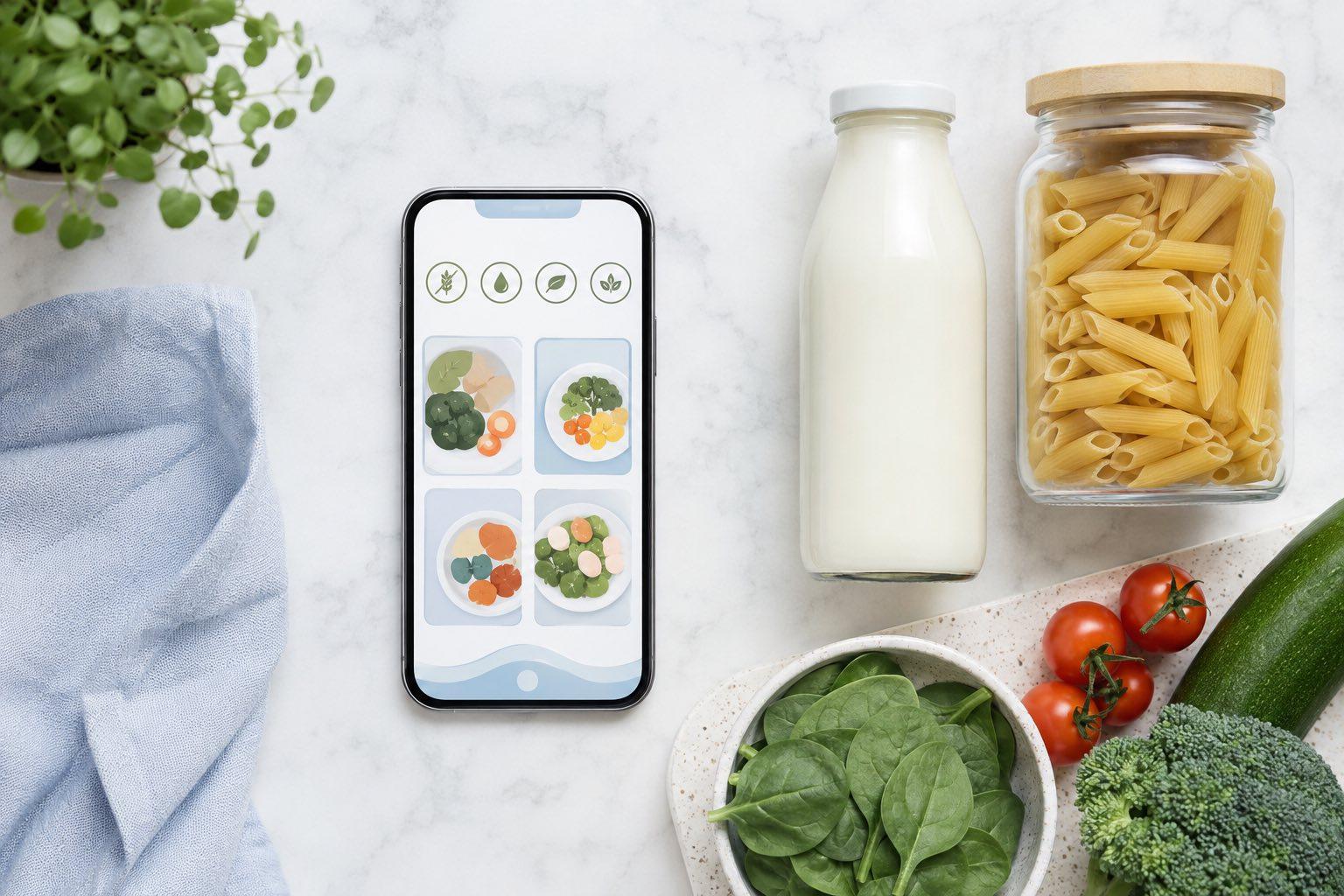
1. Remy
Remy lets you set dietary needs and allergies once, and applies them consistently across recipe suggestions, the weekly plan and the shopping list, so a restricted ingredient does not quietly slip through at one stage after being filtered out at another.
That end-to-end consistency is what genuinely matters for anyone managing a real allergy rather than a loose preference, since the risk usually lives in the gap between planning and shopping. Verdict: the strongest choice for keeping a restriction respected through the entire process, not just at the recipe stage.
2. Mealime
Mealime supports a genuinely wide range of diets, including low carb, vegan, vegetarian, paleo, keto and pescatarian, and lets you add specific allergies and food preferences on top to further refine what it suggests.
It is a strong, free way to plan around a diet, though it works from its own recipe catalogue rather than your own collection, so flexibility is somewhat bounded by what it already has in its library. Verdict: a great free option if your restriction fits one of its supported diet types.
3. Fig
Fig is built specifically for allergies and specialised diets: scan a product barcode and it tells you clearly whether it fits your needs, covering thousands of restrictions from low FODMAP to alpha-gal to gluten-free, with support for multiple profiles for different family members.
It is a food scanner rather than a meal planner, so it is best used alongside a planning app rather than instead of one. Verdict: the most thorough option for scanning individual products against a serious allergy.
4. Spoonful
Spoonful does one specific job exceptionally well: managing a low-FODMAP diet. Developed with dietitians from Monash University, the researchers behind the FODMAP diet itself, it uses a simple traffic-light system to flag whether a food is safe.
Its focus is narrow by design, so it is not the right tool for a general allergy, but for anyone specifically managing IBS through FODMAP, its authority in the space is hard to match. Verdict: the specialist pick if FODMAP is your specific concern.
5. Paprika 3
Paprika does not have built-in allergy filtering, but its tagging system lets you build your own categories and flag recipes manually, which suits someone who wants full manual control over exactly what counts as safe for them.
It asks more setup work than an app with automatic filters, but for a well-defined, stable diet you manage yourself, that manual control can actually be an advantage rather than a limitation. Verdict: a solid choice if you would rather tag things yourself than trust an automatic filter.
6. Samsung Food
Samsung Food lets you filter recipes by diet type as you build a weekly plan, pulling from its large library of imported recipes, which makes it a reasonable free option for a broadly defined diet rather than a specific, serious allergy.
Its filtering is closer to a preference tag than a strict allergy safeguard, so it suits flexible dietary goals more than a household managing something with real medical stakes. Verdict: fine for general diet preferences, less suited to strict allergy management.
Eating around a real restriction should not mean double-checking every ingredient yourself. Remy is built to keep your dietary needs respected from the recipe all the way through to the shopping list, so you can plan the week with genuine confidence.
Frequently asked questions
What is the best meal planning app for a serious food allergy?
Look for an app that filters consistently from recipe through to shopping list, such as Remy, or a dedicated scanner like Fig for checking individual products.
Can a meal planning app manage more than one dietary restriction in the same household?
Yes, though support varies. Remy and Fig both support setting different needs per person, which matters for households managing more than one restriction at once.
Is a food scanner app enough on its own for managing an allergy?
It helps for checking individual products, but a scanner like Fig works best alongside a meal planning app that filters recipes and shopping lists too, rather than as a replacement for one.
What is the best app specifically for a low-FODMAP diet?
Spoonful is built specifically for FODMAP, developed with the Monash University researchers behind the diet itself, and is more specialised than a general meal planner.