The Best Healthy Eating Apps in 2026, Ranked
Plenty of apps that promise to help you eat better are really calorie counters in disguise. That suits some people, but for many of us healthy eating is less about logging every bite and more about cooking more often, choosing better products in the supermarket and getting more vegetables onto the plate.
So this ranking deliberately leaves out the macro trackers and weight-loss programmes, which we have covered separately, and focuses on healthy eating apps that help with everyday decisions: what to cook, what to buy and what to swap.
As a yardstick, we kept the NHS Eatwell Guide in mind: fruit and vegetables should make up just over a third of what you eat each day.
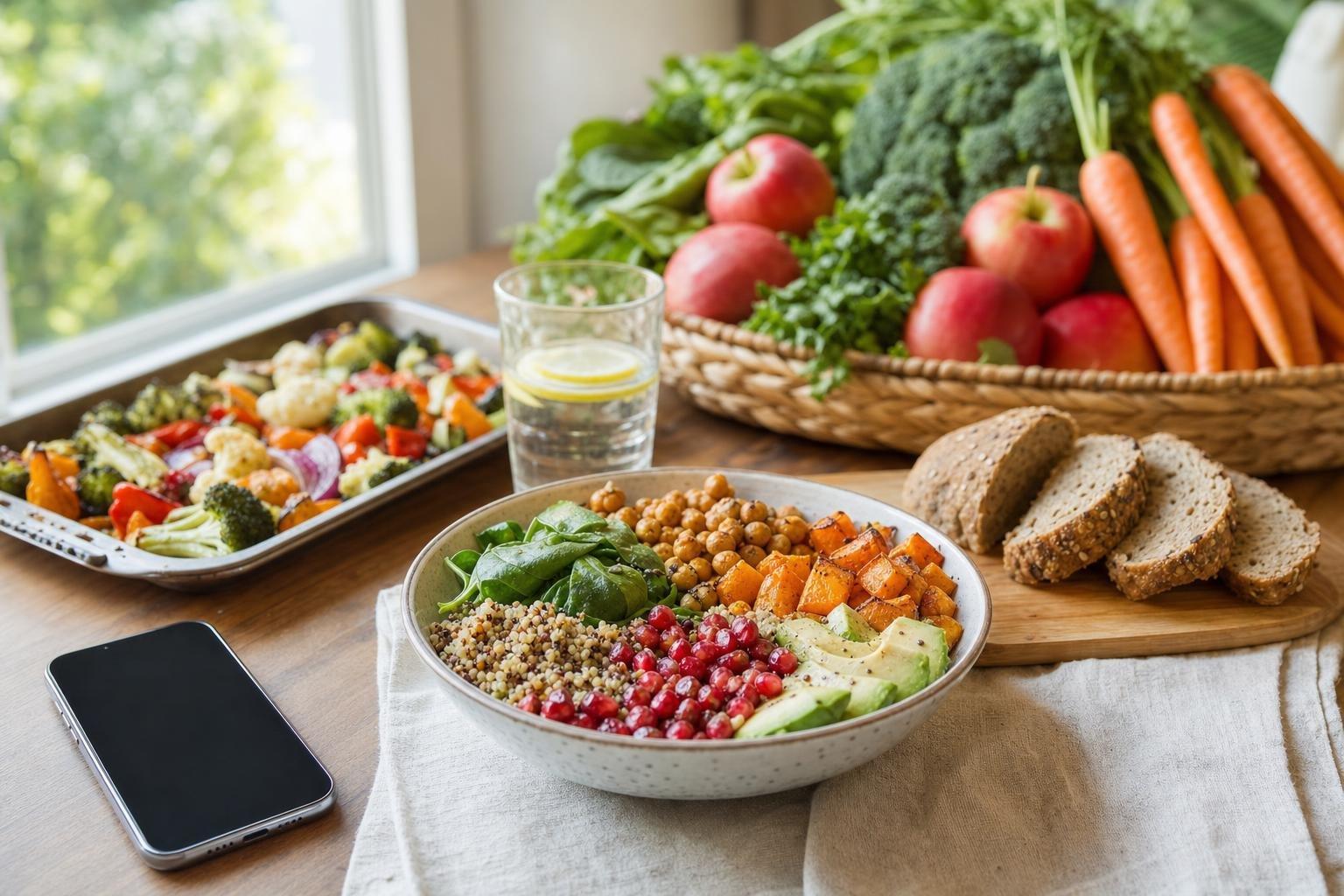
1. Remy
The simplest way for most people to eat more healthily is to cook more of their own meals, and that is what Remy is built to make easier. Its RemAI assistant generates personalised recipes and weekly meal plans around your preferences, so you can ask for more vegetables, more fish or lighter weeknight dinners and get a plan you will actually cook.
The Smart Shopping List then adds what you need to your Tesco, Aldi or Asda basket, and the Digital Kitchen tracks what you already have and when it expires, so the fresh food you buy gets eaten rather than binned. Remy is free on iOS and Android.
It is built around cooking and shopping rather than scoring individual products in the supermarket aisle, so if decoding labels is your weak spot, pair it with a scanner from this list. Verdict: the best app for eating more healthily by cooking more.
2. NHS Food Scanner
The NHS Food Scanner is the official option. You scan the barcode of a packaged food to see how much sugar, salt and saturated fat it contains, shown with traffic-light ratings, then swipe to find healthier swaps marked as a good choice.
It is free with no in-app purchases, works on iPhone and Android, and rates 4.2 from around 1,200 ratings in the UK App Store. It is aimed squarely at families and children's snacks, and it only looks at sugar, salt and saturated fat on packaged foods, with no recipes or meal planning. Verdict: the best free tool for healthier swaps in the weekly shop.
3. Yuka
Yuka scans food and personal-care barcodes and gives each product a score out of 100, suggesting healthier alternatives when a product scores badly. The score is 60% nutritional quality, based on Nutri-Score, 30% additives and 10% organic, and its database covers around six million products.
The app is free, with an annual Premium membership from around £10 in the UK that adds search without scanning, offline mode and diet alerts. It rates 4.8 from over 100,000 ratings in the US App Store. The catch is that one number simplifies nutrition a great deal, and a high-risk additive caps a product's score at 49. Verdict: the best independent product scanner.
4. Mealime
Mealime is the most practical dedicated app here for turning good intentions into a week of meals. It builds personalised meal plans of quick, step-by-step recipes, supports diets such as vegan, keto and gluten-free, and generates a grocery list automatically.
The core app is free. Meal Planner Pro costs £2.99 a month in the UK and adds full nutrition information, calorie filters, recipe notes and the full recipe collection. The main drawback is that the nutrition detail and the full library sit behind Pro. Verdict: the best dedicated healthy meal planner on a budget.
5. Kitchen Stories
Kitchen Stories is not a health app as such, but it is one of the best places to fall back in love with cooking at home. It offers thousands of free step-by-step recipes with polished photography, dietary filters, custom cookbooks and grocery lists.
All recipes stay free. Kitchen Stories Plus, priced by the company at €7.99 a month or €79.99 a year, adds search by ingredient, saving recipes from other websites and a personalised feed based on your dietary preferences. Because it is not built specifically around healthy eating, picking balanced recipes is up to you. Verdict: the best source of inspiration to cook more often.
6. ZOE
ZOE takes the most scientific approach on this list, focusing on food quality and processing rather than calories. You photograph meals to get a score and suggested swaps, scan packaged foods against its processed food risk scale.
It is also the most expensive. In the UK, an app-only membership costs from £9.99 a month on a 12-month plan, £119.88 in total, and the optional gut health test costs £149 on top and is only available with membership. Verdict: the pick for people who want evidence-led coaching and are happy to pay for it.
What to look for in a healthy eating app
Start with your actual barrier. If you buy a lot of packaged food, a scanner such as the NHS Food Scanner or Yuka will change your shop quickly. If you rarely cook, a meal planner matters more than any score, because cooking more of your own meals is one of the biggest shifts most people can make.
The NHS recommends at least five portions of fruit and vegetables a day, with an adult portion being 80g, and starchy foods making up just over a third of what you eat. The best healthy eating app is the one that gets you closer to that plate without making food feel like homework.
The best healthy eating apps are the ones that change what ends up on your plate. Scanners help in the supermarket aisle, but the bigger win for most people is cooking more of their own meals, and that is where Remy fits: RemAI plans a week of recipes you will enjoy, the Smart Shopping List fills your basket and the Digital Kitchen helps make sure the vegetables get eaten.
Frequently asked questions
What is the best free healthy eating app in the UK?
The NHS Food Scanner is free with no in-app purchases and helps you find healthier swaps for packaged foods. For planning healthier meals and shopping for them, Remy is free on iOS and Android.
Do I need to count calories to eat healthily?
Not necessarily. Focusing on what you eat, with more fruit, vegetables and home cooking and fewer foods high in fat, salt and sugar, follows the NHS Eatwell Guide.
How many portions of fruit and veg should I eat a day?
The NHS recommends at least five portions of a variety of fruit and vegetables a day. An adult portion is 80g, or 30g of dried fruit, and juice or smoothies count as one portion at most.
Sources
- NHS Food Scanner, NHS Better Health (2023)
- NHS Food Scanner, Apple App Store (2026)
- Yuka: Food & cosmetic scanner, Apple App Store (2026)
- How are food products scored?, Yuka Help Center (2026)
- How much does the membership cost?, Yuka Help Center (2026)
- Mealime Meal Plans & Recipes, Apple App Store (2026)
- Mealime Pro, Mealime Support (2023-12-29)
- Kitchen Stories: Recipes, Apple App Store (2026)
- FAQ: all your Kitchen Stories Plus questions answered, Kitchen Stories (2024-01-15)
- ZOE membership, ZOE (2026)
- The ZOE app, ZOE (2026)
- The Eatwell Guide, NHS (2022-11-29)
- 5 A Day portion sizes, NHS (2022-07-19)