How to Cut Your Weekly Grocery Bill Without Eating Worse
Cutting your weekly food bill doesn't have to mean switching to a diet of plain rice and tinned beans, though those are genuinely cheap, useful ingredients when you know how to use them. The bigger opportunity for most households is far less about restriction and far more about waste. WRAP, the UK's leading authority on food waste, puts the cost of edible food thrown away by the average household of four at around £1,000 a year. That's not a small rounding error in a weekly shop; it's real money spent on food that was never eaten. Tackling that waste, alongside a few small habits around planning and batch-cooking, is where most of the realistic savings actually live. This guide walks through five practical tactics to **reduce your grocery bill**, starting with the one that costs nothing to fix.
Start with what you're already throwing away
Before changing what you buy, it's worth looking at what ends up in the bin. According to WRAP, the average UK household of four throws away roughly £1,000 of edible food every year, food that was bought, then wasted, for no return at all.
That's not a small leak in the weekly shop; it's the equivalent of a proper grocery run every few weeks going straight in the bin. WRAP estimates that halving household food waste could put around £500 a year back into the average family's budget, without changing a single ingredient you actually eat. The fastest way to find your own number is a week of honestly tracking what you throw away, not what you plan to eat.
Plan meals around what you already have
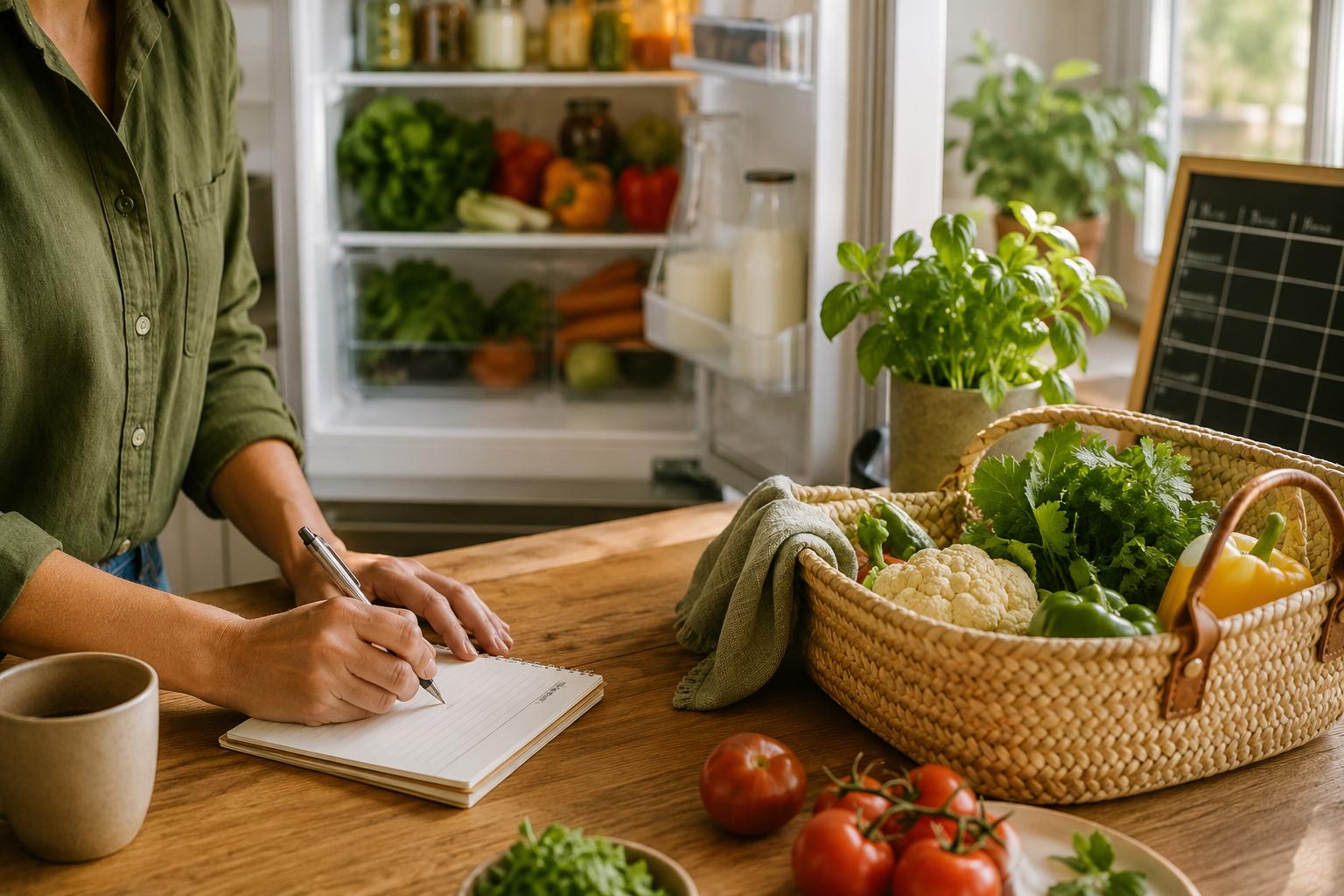
The cheapest ingredient in any kitchen is the one you've already bought. Building a weekly meal plan around what's sitting in the fridge and freezer, rather than starting from a recipe and buying everything fresh, is one of the simplest ways to stop food going off before you get to it.
A five-minute stocktake before you write a shopping list catches the half-used bag of spinach or the last of the mince before it's forgotten at the back of a shelf. It also naturally nudges you toward more improvised, one-pot cooking, which tends to be cheaper than recipes that call for a long list of single-use ingredients.
Batch-cook to make cheap ingredients stretch further
Tinned beans, lentils, chickpeas and a modest amount of mince are some of the least expensive proteins available, and they go significantly further when batch-cooked into a stew, curry or bake rather than served as a standalone portion. Cooking a large pot once and portioning it across several dinners also means fewer separate cooking sessions, which cuts down on the small, incidental extra ingredients that creep into a weekly shop.
Freezing half of what you batch-cook turns one cooking session into two weeks of dinners, rather than one, which is where the real savings compound.
Shop with a list, and shop once
Multiple trips to the supermarket in a week reliably cost more than one planned shop, simply because every extra visit is another chance for an impulse buy. Writing a list based on an actual meal plan, and sticking to it, removes most of the guesswork and most of the temptation.
It's also worth checking own-brand alternatives for basics like tinned tomatoes, pasta, rice and frozen vegetables, which are often produced to a similar specification as branded equivalents at a noticeably lower price.
Freeze more, more often
The Food Standards Agency recommends cooling cooked food and refrigerating it within one to two hours, and eating leftovers within two days, or freezing them if that window won't work. Freezing isn't just for batch-cooked meals: bread, cheese, herbs in oil, and even milk all freeze well, and doing so routinely is one of the simplest ways to stop food going to waste before it's used.
A loosely organised freezer, labelled with dates, turns 'I forgot I had this' into an actual dinner rather than another bag lost at the back for six months.
None of this requires giving up the meals you actually enjoy; it just means less of what you buy ends up wasted, and more of your weekly budget goes toward food you'll actually eat. Small, repeatable habits beat a strict budget you'll abandon by February.
Frequently asked questions
How much could I realistically save by cutting food waste?
WRAP estimates that halving household food waste could save the average family of four around £500 a year, though the exact figure depends on how much you're currently throwing away.
Is meal planning actually worth the time it takes?
For most households, yes, even a rough weekly plan reduces both food waste and impulse purchases, which tend to be the two biggest drivers of an inflated grocery bill.
Are own-brand groceries actually as good as branded ones?
For staples like tinned tomatoes, pasta, rice and frozen vegetables, own-brand versions are often produced to a similar specification at a lower price, making them a reasonable place to trim costs without a noticeable difference in your cooking.
What's the single biggest lever for cutting a grocery bill?
Reducing food waste tends to have the biggest impact, since it's money spent on food that delivers zero value. Combining that with a planned, list-based shop covers most of the remaining savings available without changing what you eat.