High-Protein Snacks, Ranked, and the Ones That Are Mostly Sugar
The high protein snacks aisle has got considerably bigger and considerably less honest. A June 2026 analysis by Oxford Online Pharmacy looked at 88 high-protein snacks across the six largest UK supermarkets and found that 77 of them, about 88%, exceeded NHS guidance that free sugars should be under 5% of daily calories. More pointedly, 16% of the products contained as much sugar as protein, or more. The pharmacist who led the work called it protein-washing, and the phrase fits. The surprise is which products came out worst, because it is not the one everybody blames. Below are the snacks that actually earn the label, ranked by how much protein they deliver for how little processing, and the categories to treat with suspicion.
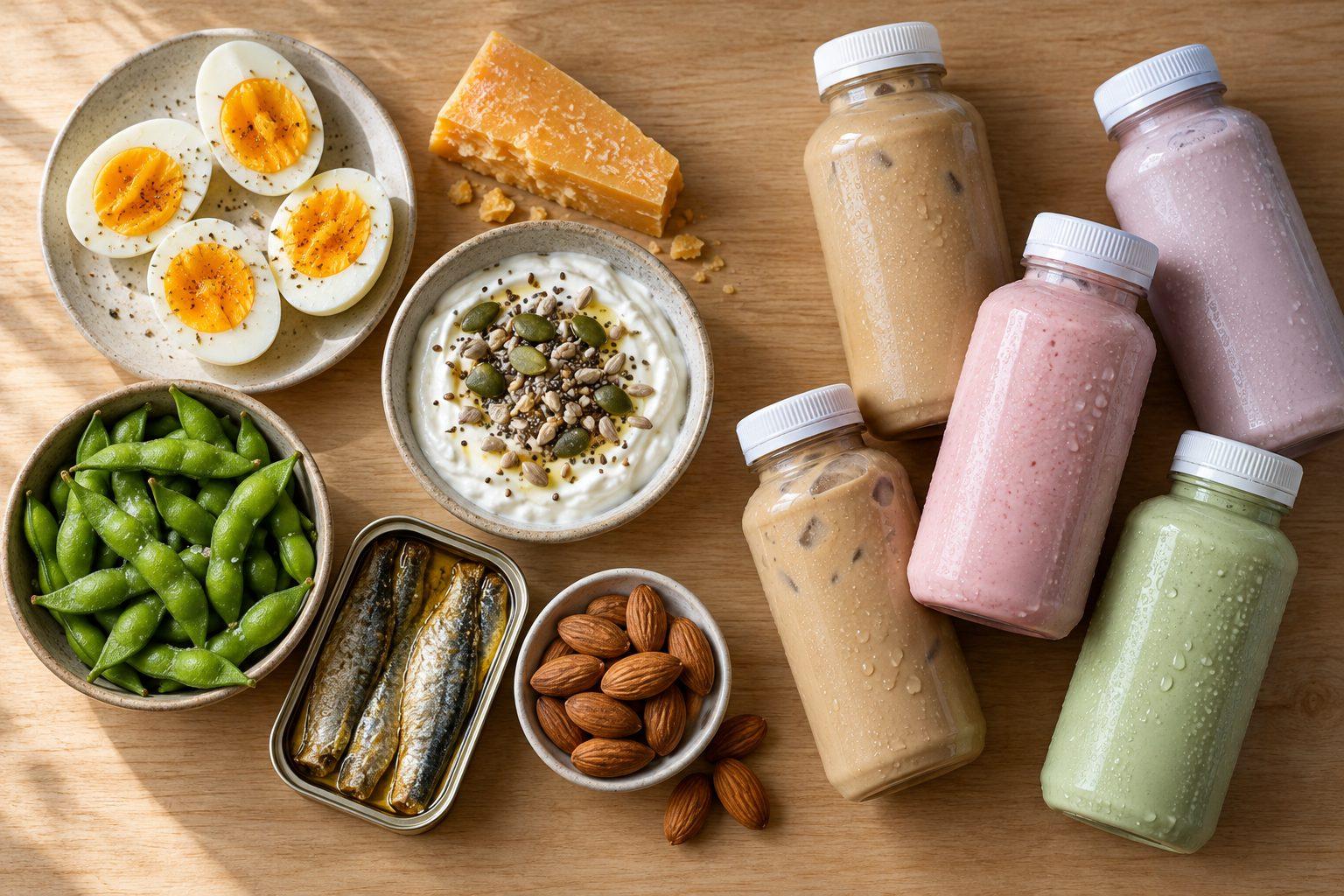
Boiled eggs
Two boiled eggs give you about 14g of protein, cost roughly 42p at Aldi's medium free range price, and require no label at all. They keep in the fridge for days once boiled, which is the whole trick: the reason people reach for a packaged snack is availability, not preference.
The one genuine drawback is that they are dull on their own. Salt, pepper and a little chilli oil or a dab of mayonnaise fixes that for almost nothing. Boil a batch of six at the start of the week and the decision disappears for several days.
Strained Greek yogurt, not Greek style
This distinction matters more than any other on this page. Plain Greek style yogurt carries about 5.7g of protein per 100g according to the British Nutrition Foundation. Properly strained Greek yogurt and skyr-style tubs carry two to three times that, so a 150g pot can be 15g of protein rather than 8g.
The word style is doing a lot of quiet work on those labels. Flavoured protein yogurts are also the third-worst category in the Oxford analysis at 26% of calories from sugar, so the move is a plain tub plus your own fruit. Check the protein figure on the back rather than the claim on the front.
Cheese
A 30g piece of mature cheddar is about 7.6g of protein and costs around 18p. Cheese is genuinely good value protein, as our cost-per-20g ranking found, and it has the advantage of being a snack people actually want to eat rather than one they are enduring.
The constraint is saturated fat and the ease of getting through far more than 30g while standing at the fridge. Cutting a portion and putting the block away works better than relying on restraint. Cottage cheese is the lower-fat route at 9.4g per 100g, and has shed enough of its 1980s reputation to be worth revisiting.
Tinned fish
A small tin of sardines is 55p at Aldi and gives you roughly 24g of protein, along with omega-3 fats you would otherwise be buying a supplement for. Tuna is the blander, more popular option at about 25g of protein per 100g drained.
This is the highest protein-per-pound snack on the list and the one most people resist. Sardines on toast is a genuine meal rather than a snack; straight from the tin with lemon and black pepper it takes a minute. Buy them in oil rather than brine if you are eating them on their own, because the texture is considerably better.
Edamame beans
Frozen edamame give you about 11g of protein per 100g, cook from frozen in three minutes and are one of the few plant snacks with a reasonably complete amino acid profile. Podded and salted, they occupy your hands in the way crisps do, which is a real part of why snacks get eaten.
They are not the cheapest item here and they are less widely stocked than the rest, usually in the frozen vegetarian section rather than with the snacks. For anyone avoiding dairy and fish, they are the strongest option on this page.
Protein bars, which are better than their reputation
The genuine surprise in the Oxford Online Pharmacy analysis is that protein bars were the best-performing category on sugar, at just 7% of calories, against 33% for protein milkshakes and 32% for protein coffees. The food most often singled out as the fake-health product came out well ahead of the drinks nobody questions.
That does not make every bar a good choice. They are expensive per gram of protein, heavily processed, and easy to eat without noticing. But if the choice in a petrol station is a bar or a bottled protein coffee, the evidence points at the bar.
The category to be sceptical of: protein drinks
Protein milkshakes took the worst sugar figure in the analysis at 33% of calories, with protein coffees just behind at 32%. These are the products that read as the most virtuous and the most convenient, and they are where the sugar is.
The mechanism is straightforward: a drink has to taste pleasant cold and thin, and sugar is the cheapest way to achieve that. If you want a protein drink, the label's protein-to-sugar ratio is the only number worth reading — and the Oxford figure that 16% of products held as much sugar as protein is the reason to actually look.
What the high-protein label does and does not mean
UK rules let a product claim high in protein when at least 20% of its energy comes from protein. That is a claim about proportion, not about quantity, and it says nothing whatsoever about sugar, salt or degree of processing.
Which is how 88% of a category can carry a health-sounding claim and still exceed NHS free-sugar guidance. The practical defence is unglamorous: foods that never needed a claim in the first place, and for anything in a wrapper, the back of the pack rather than the front.
The pattern in all of this is that the snacks with the most protein marketing tend to have the most sugar, and the ones with no marketing at all — eggs, cheese, a tin of fish — quietly do the job. Remy saves the recipes you actually want to cook and turns them into a shopping list, which is the least glamorous and most reliable way to end up with real food in the fridge when you want something at four in the afternoon.
Frequently asked questions
What is the best high protein snack?
Whole foods that never carried a claim. Two boiled eggs give about 14g of protein, a small tin of sardines about 24g, a 30g piece of cheddar about 7.6g, and none of them needs a label checking. They are also cheaper per gram of protein than almost anything packaged.
Are protein bars actually unhealthy?
Less so than their reputation suggests, at least on sugar. In a 2026 UK analysis of 88 high-protein snacks, bars were the best-performing category at 7% of calories from sugar, well ahead of protein milkshakes at 33% and protein coffees at 32%. They remain expensive and heavily processed.
Why is Greek style yogurt lower in protein than Greek yogurt?
Because it is not strained. Straining removes whey and concentrates the protein, so real Greek yogurt and skyr-style tubs carry two to three times the protein of a Greek style one, which the British Nutrition Foundation puts at about 5.7g per 100g. The word style is the tell.
Does a high protein label mean a product is healthy?
No. UK rules allow a high in protein claim when 20% or more of a product's energy comes from protein, which is a statement about proportion and says nothing about sugar, salt or processing. That is how 88% of the snacks in the Oxford analysis could carry protein marketing and still exceed NHS sugar guidance.